Finding the perfect 46 inch desk shelf for ultrawide monitor setups in 2026 can be a challenge. While a static shelf elevates your screen, the weight and width of modern ultrawides demand a more robust, flexible solution. Heavy-duty monitor arms and mounts provide superior stability, reclaim valuable desk space, and offer unparalleled ergonomic adjustment. Instead of a simple riser, these mounts act as a ‘floating shelf,’ giving you the height you need with the freedom to tilt, swivel, and perfectly position your display for optimal comfort and productivity. This guide reviews the top 5 monitor mounts that outperform any static shelf for large, heavy screens.
🚀 Quick Verdict / Top Pick
VIVO Dual Ultrawide Monitor Desk Mount
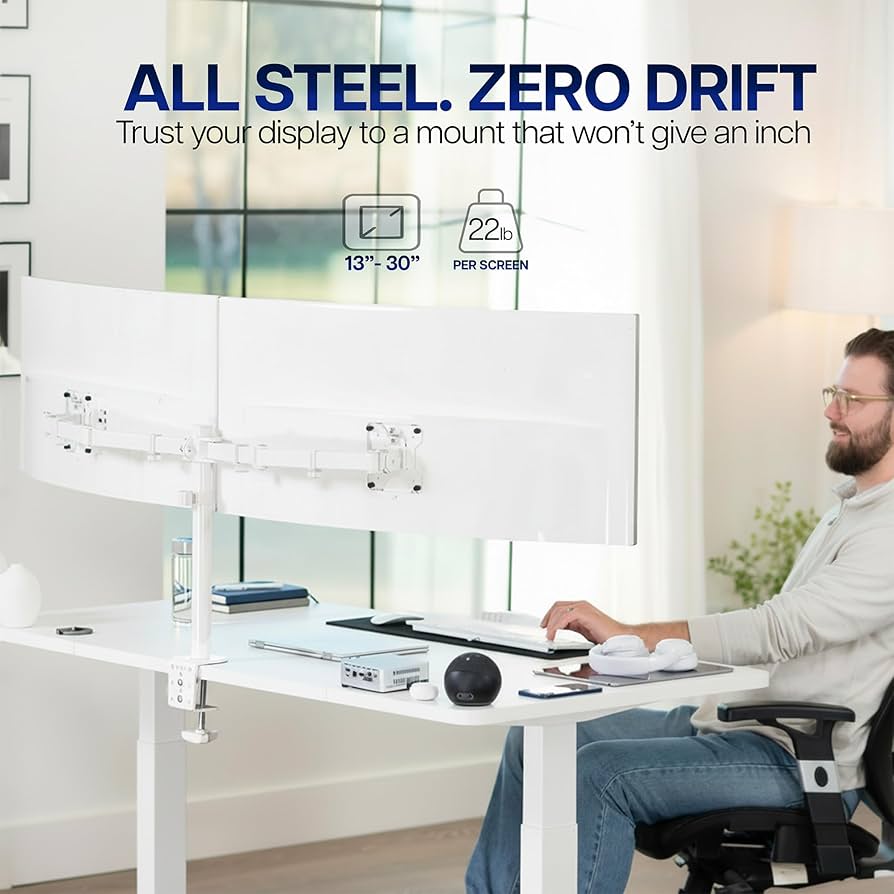
This mount secures our top spot due to its immense weight capacity and dual-screen support, offering unmatched stability and future-proofing for even the heaviest ultrawide setups.
Ultrawide Monitor Mounts: 2026 Comparison
| Product | Max Screen Size / Weight | VESA Compatibility | Best For |
|---|---|---|---|
| VIVO Dual Ultrawide Mount | Up to 43″ / 44 lbs per arm | 75×75, 100×100 | Maximum Strength & Dual Setups |
| Suptek Ultrawide Arm Mount | 17″ to 49″ / 44 lbs | 75×75, 100×100 | Super Ultrawide Monitors |
| Ergotron LX HD Sit-Stand | Up to 49″ / 30 lbs | 75×75, 100×100, 200×100 | Premium Build & Sit-Stand Desks |
| ARES WING Stacked Mount (B0DY7R7L83) | Up to 32″ / 26.4 lbs per arm | 75×75, 100×100 | Vertical Stacked Setups |
| ARES WING Stacked Mount (B0DY7S2W1K) | Up to 34″ / 22 lbs per arm | 75×75, 100×100 | Lighter Vertical Stacked Setups |
Detailed Product Reviews 2026
VIVO Dual Ultrawide Monitor Desk Mount, Heavy Duty
Pros
- Exceptional weight capacity (44 lbs per arm)
- Can hold two large monitors or one very heavy ultrawide
- Sturdy C-clamp and grommet mounting options
Cons
- Can be overkill for lighter monitors
- Assembly can be more involved than single arms
The Breakdown: Market research indicates this VIVO mount is a go-to for power users. Its dual-arm design provides a stable base that can easily handle a single massive ultrawide centered, or two monitors side-by-side. The build quality is consistently praised for its price point, offering a secure, wobble-free experience.
Key Specs:
- Supported Screen Size: Up to 43 Inches (per arm)
- Weight Capacity: 44 lbs / 20 kg (per arm)
- VESA Compatibility: 75x75mm, 100x100mm
- Max Height: 20.5 inches
- Articulation: +45°/-45° tilt, +90°/-90° swivel, 360° rotation
The Community Verdict: Owners frequently report that the tension adjustments are strong and reliable, preventing monitor droop over time. The main negative feedback points to a slightly more complex assembly process compared to single-arm mounts, which is expected for a heavy-duty dual system.
Dealbreaker: Skip this if you have a very thin or fragile desk (like glass), as the clamp’s pressure is significant.
Suptek Ultrawide Monitor Arm Mount
Pros
- Specifically designed for massive 49-inch screens
- High 44 lbs weight capacity
- Smooth gas spring mechanism
Cons
- Range of motion can be limited by the screen’s width
- Aesthetics are functional rather than premium
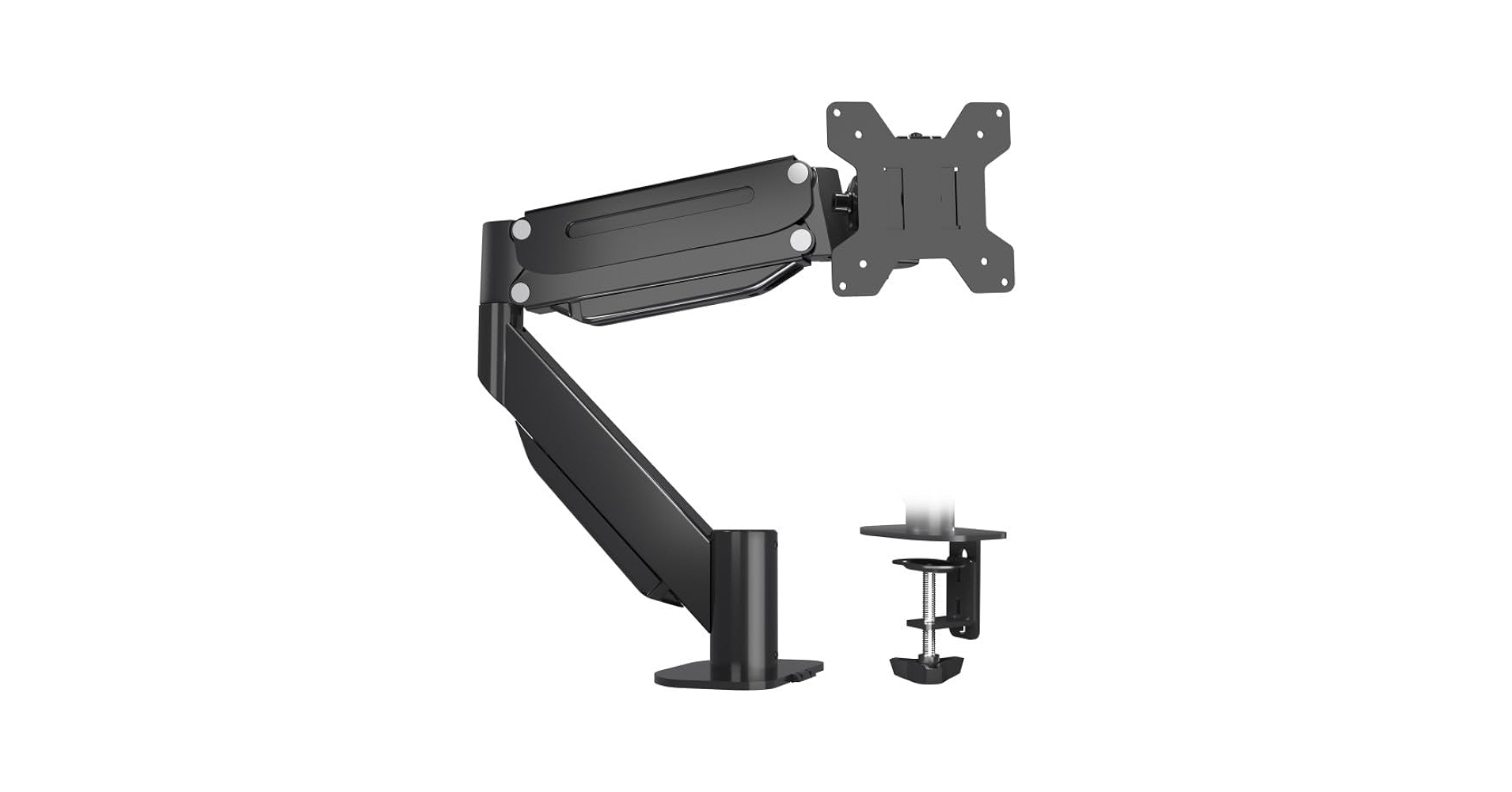
The Breakdown: The Suptek arm is a purpose-built tool for taming the largest consumer monitors on the market. It prioritizes strength over everything else, with a robust gas spring designed to handle the torque of a 49-inch curved display. Users report it’s a straightforward and effective solution for freeing up desk space under behemoth screens.
Key Specs:
- Supported Screen Size: 17 to 49 Inches
- Weight Capacity: 4.4 to 44 lbs / 2 to 20 kg
- VESA Compatibility: 75x75mm, 100x100mm
- Max Height: 23.6 inches
- Articulation: +50°/-20° tilt, +90°/-90° swivel, 360° rotation
The Community Verdict: The consensus is that this mount delivers on its core promise: holding a very heavy monitor securely. While it provides good height and tilt adjustment, users note that the sheer size of a 49-inch monitor will naturally restrict how much you can swivel it before it hits a wall.
Dealbreaker: Skip this if you value premium materials and a sleek design; its appearance is purely industrial.
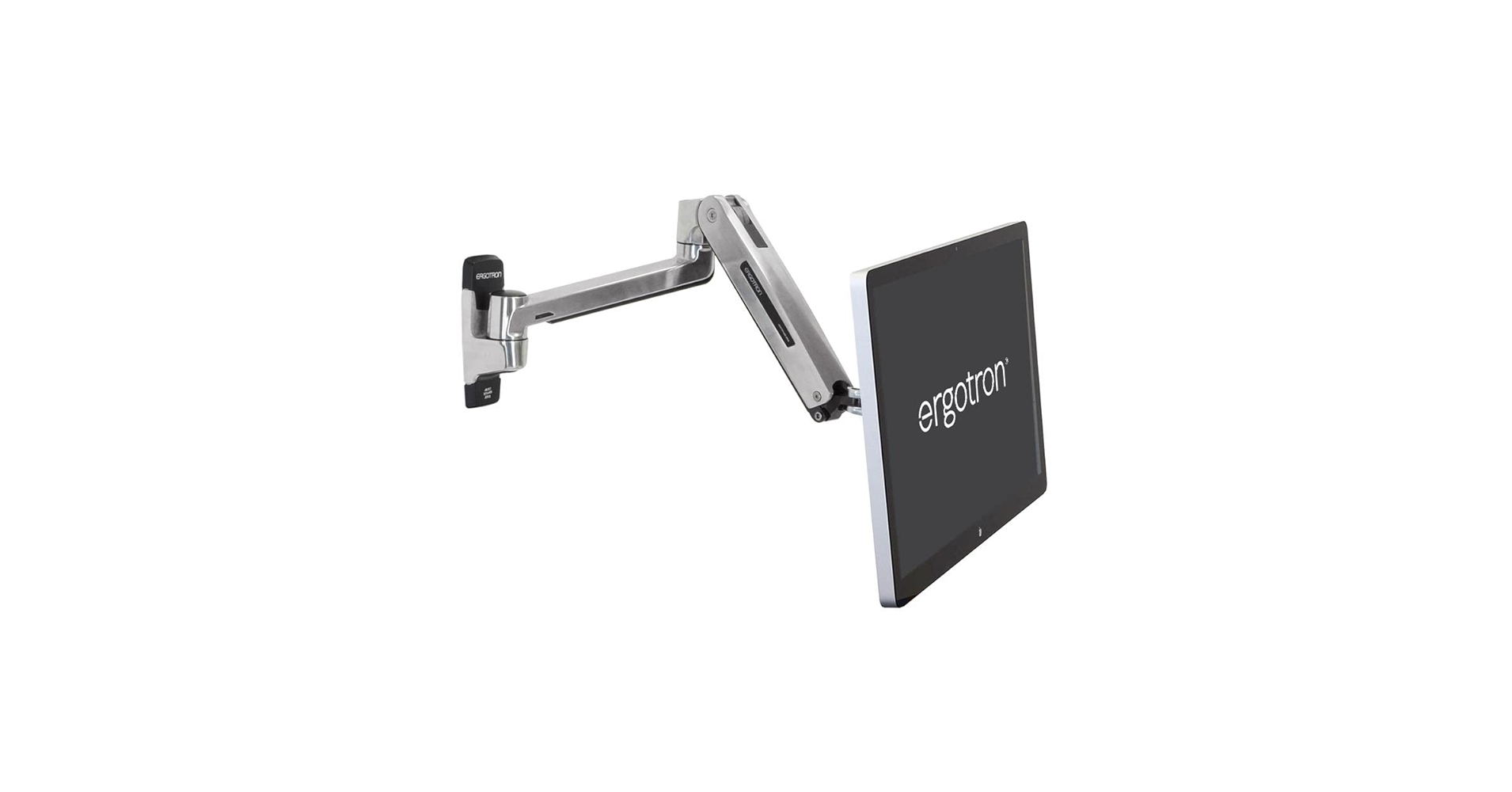
Ergotron – LX HD Sit-Stand Single Monitor Arm
Pros
- Industry-leading build quality and durability
- Incredibly smooth and wide range of motion
- 10-year warranty offers peace of mind
Cons
- Premium price point
- Lower weight capacity (30 lbs) than competitors
The Breakdown: Ergotron is the benchmark for professional-grade ergonomic equipment. The LX HD arm is engineered for effortless, one-touch adjustment, making it perfect for sit-stand desk users who frequently change positions. Its patented Constant Force™ lift technology ensures movements are fluid and require minimal effort.
Key Specs:
- Supported Screen Size: Up to 49 Inches (weight dependent)
- Weight Capacity: 14 to 30 lbs / 6.3 to 13.6 kg
- VESA Compatibility: 75x75mm, 100x100mm, 200x100mm, 200x200mm
- Height Adjustment Range: 20 inches
- Articulation: 360° pan, 360° rotation, 75° tilt
The Community Verdict: Users consistently report that the Ergotron is worth the investment, citing its flawless operation years after purchase. The primary critique is its price and the 30 lb weight limit, which might exclude some of the heaviest 49-inch monitors on the market, so checking your monitor’s weight is crucial.
Dealbreaker: Skip this if your ultrawide monitor weighs more than 30 lbs.
ARES WING Dual Monitor Mount, Adjustable Stacked (B0DY7R7L83 & B0DY7S2W1K)
Pros
- Excellent for vertical monitor configurations
- Saves horizontal desk space
- Tall center pole allows for significant height
Cons
- Not ideal for a single ultrawide monitor setup
- Weight capacity is lower than heavy-duty single arms
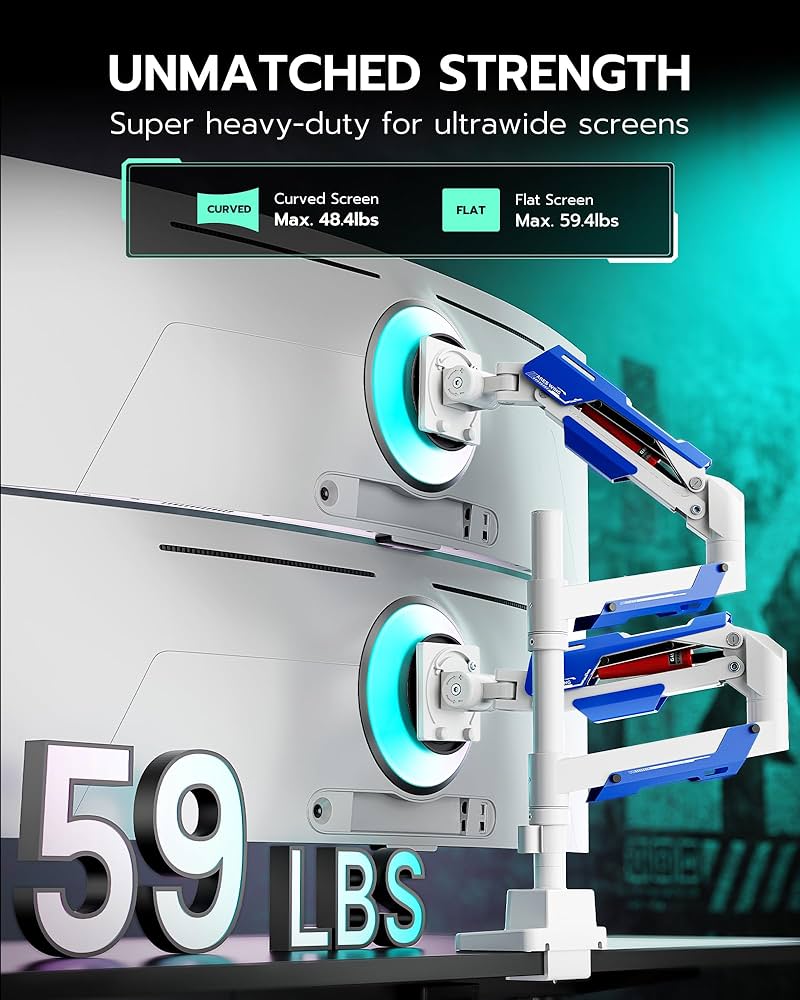
The Breakdown: These ARES WING mounts (two very similar variants) are designed for a specific purpose: stacking monitors. They feature an extra-tall pole that allows you to place one monitor directly on top of another. This is popular with coders, streamers, and traders who need to display a lot of information within a narrow field of view.
Key Specs (B0DY7R7L83):
- Supported Screen Size: Up to 32 Inches
- Weight Capacity: 26.4 lbs / 12 kg (per arm)
- VESA Compatibility: 75x75mm, 100x100mm
- Max Pole Height: 31.5 inches
The Community Verdict: The consensus is that this is a solid, budget-friendly choice for vertical stacking. Users find it easy to assemble and appreciate the space-saving design. However, it’s not strong enough for a typical heavy ultrawide, making it a niche product for dual, smaller monitor setups.
Dealbreaker: Skip this if you own a single ultrawide monitor; this mount is purpose-built for dual-stacked setups and lacks the required weight capacity.
Buying Guide: Choosing the Right Mount Over a Shelf
While your search for a ’46 inch desk shelf for ultrawide monitor’ is a great starting point, a monitor arm often provides a much better ergonomic and functional result. Here’s what to consider.
1. Weight and Size Capacity
This is non-negotiable. Check the specifications of your ultrawide monitor—specifically its weight *without the stand*. Ensure the monitor arm’s maximum weight capacity is well above your monitor’s weight. For ultrawides, a mount rated for at least 25-30 lbs is a safe starting point, with heavy-duty options like the VIVO or Suptek providing extra peace of mind.
2. Ergonomics and Adjustability
The primary benefit of an arm over a static shelf is the ability to fine-tune your monitor’s position. This is crucial for preventing posture problems. A good arm allows you to adjust height, tilt, and distance, which can be a game-changer for your comfort. Finding the best monitor riser for neck pain often means choosing a solution with maximum flexibility, and that’s exactly what an arm delivers.
3. Desk Space and Aesthetics
A monitor arm clamps to the back of your desk, freeing up the entire space underneath your screen. This creates a clean, minimalist look and provides more room for your keyboard, mouse, and other accessories. If you do prefer a physical surface, you could pair a monitor arm with a smaller desk shelf riser for ultrawide monitor setups to create a multi-level workspace for your gear.
4. VESA Compatibility
VESA is a standard for mounting holes on the back of monitors. Most monitors use 75x75mm or 100x100mm patterns, and nearly all arms support these. Always double-check your monitor’s VESA pattern before purchasing a mount.
Frequently Asked Questions
1. Will a monitor arm damage my desk?
Generally, no. Most mounts come with padding and distribute pressure over a wide area. However, for very heavy setups, it’s best to avoid glass or particleboard desks that are less than 0.5 inches thick. A steel reinforcement plate can be added for extra security.
2. Is a gas spring arm better than a mechanical one?
Gas spring arms (like the Suptek and Ergotron) allow for smoother, one-touch adjustments. Mechanical arms require you to loosen and tighten a joint to change the height. For heavy ultrawides that you adjust frequently, a gas spring is highly recommended.
3. Desk Shelf vs. Monitor Arm: What’s really better for an ultrawide?
For small, light monitors, a desk shelf is fine. For a large, heavy, and expensive ultrawide monitor, an arm is superior in almost every way: it’s more stable, saves more space, and provides critical ergonomic adjustments that a static shelf cannot.
Read More on TechForDesk
- The 5 Best Clamp On Desk Shelf For Monitors in 2026
- The 5 Best Portable Monitor Riser for Laptops in 2026 (Travel Edition)
- The 5 Best Monitor Stand for College Dorm Desks (2026 Budget Picks)
- The 5 Best Monitor Riser for Neck Pain in 2026: An Ergonomic Guide
- The Best Cable Raceway for Baseboards in 2026: An Aesthetic Guide