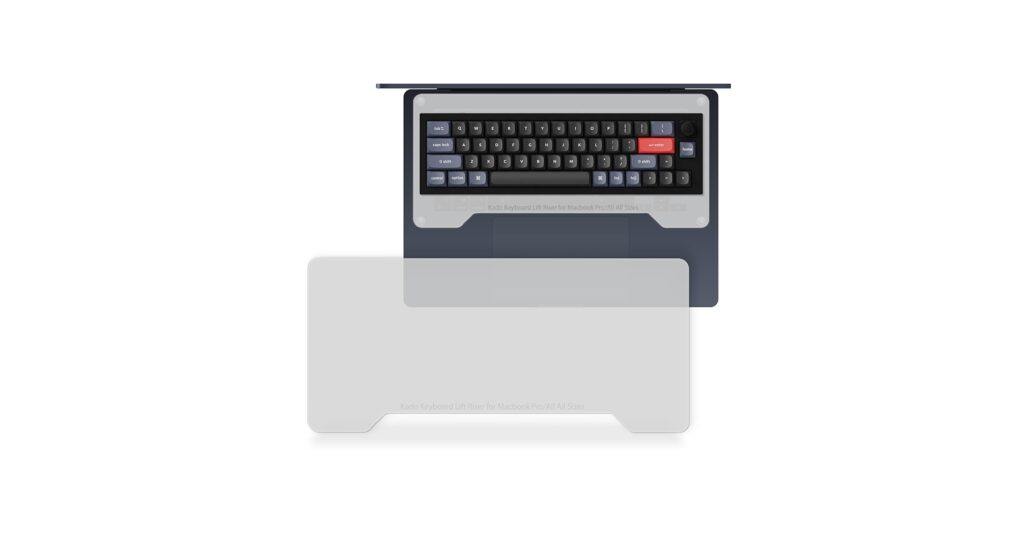
Finding the best macbook mechanical keyboard is about more than just the keyboard itself—it’s about creating a seamless, ergonomic, and aesthetically pleasing workspace. For many MacBook users, the ultimate setup involves placing a superior external keyboard directly over the laptop’s built-in one, maximizing desk space and improving posture. This guide focuses on the complete solution: our top pick for a Mac-native mechanical keyboard and the essential bridges and risers needed to perfect your high-tech, minimalist desk.
🚀 Quick Verdict / Top Pick
Macally Wireless Mechanical Keyboard for Mac
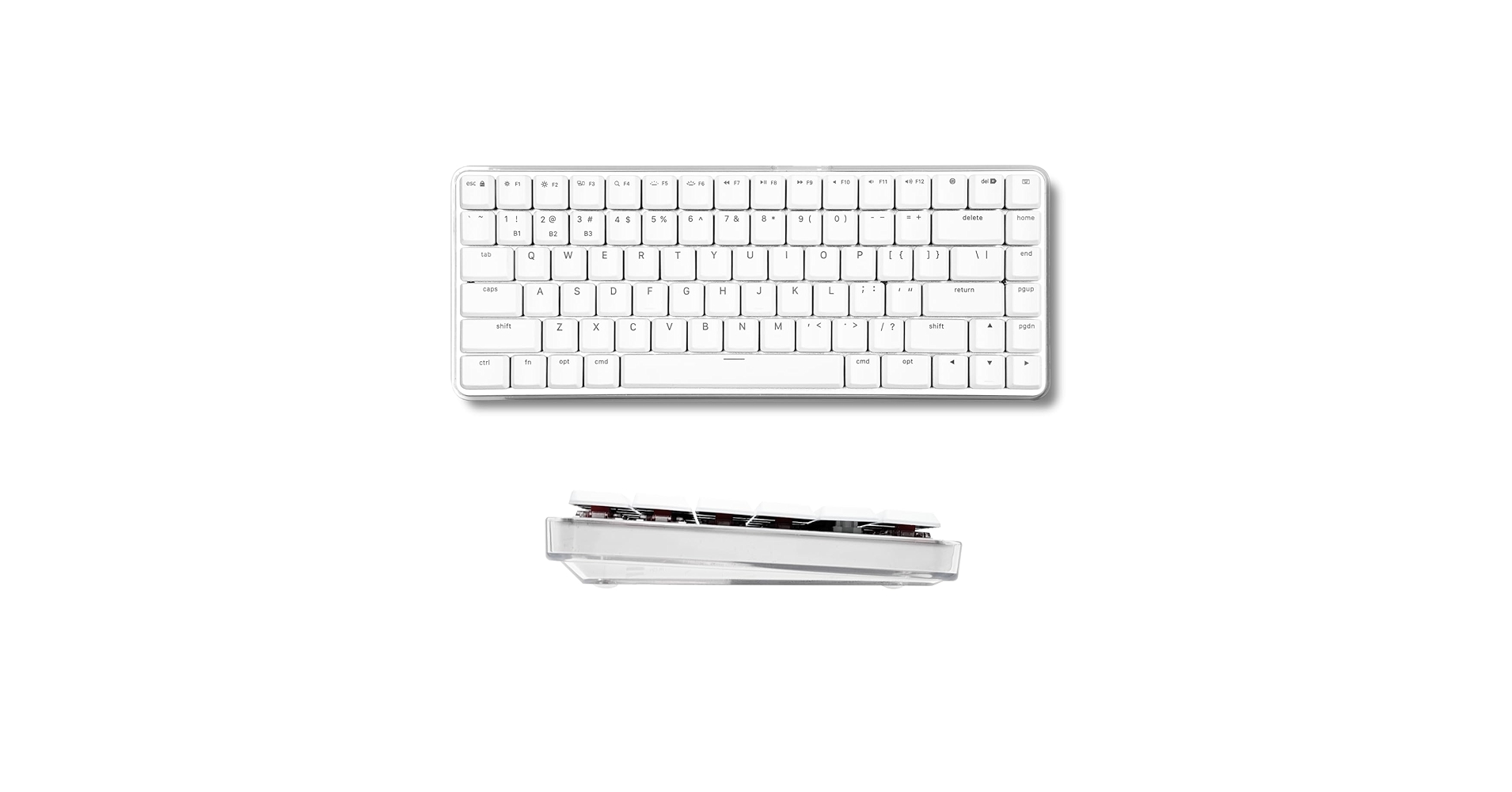
The Macally stands out as the only true keyboard on our list, offering a complete, out-of-the-box solution with Mac-specific keys and reliable wireless connectivity, making it the ideal choice for users who want a no-fuss upgrade.
Comparison at a Glance
| Product | Material / Layout | Type | Best For |
|---|---|---|---|
| Macally Wireless Mechanical Keyboard | Plastic / Mac 75% Layout | Wireless Keyboard | All-in-One Mac Solution |
| Aluminum Keyboard Bridge for Mechanical | Anodized Aluminum | Keyboard Bridge | Maximum Stability |
| Kado Lift Riser Acrylic | Frosted Acrylic | Keyboard Riser | Aesthetic Setups |
| Aluminum Keyboard Bridge (Slim Profile) | Lightweight Aluminum | Keyboard Bridge | Minimalist Portability |
| Keyboard Bridge, Keyboard Cover | Polycarbonate | Keyboard Cover | Protecting Laptop Keys |
Detailed Reviews
1. Macally Wireless Mechanical Keyboard for Mac
Pros
- True Mac layout with function keys
- Reliable multi-device Bluetooth connectivity
Cons
- Plastic construction feels less premium
- Not customizable (no QMK/VIA support)
The Breakdown: The Macally keyboard is a purpose-built solution designed to integrate perfectly with the Apple ecosystem. It provides the tactile feedback of mechanical switches without the typical setup headaches for Mac users. Its 75% layout saves space while retaining essential function keys for brightness, media, and Mission Control.
Key Specs:
- Connectivity: Bluetooth, 2.4Ghz Wireless
- Switch Type: Brown Tactile (Assumed)
- Layout: 75% Compact with Mac Modifiers
- Battery: USB-C Rechargeable
The Community Verdict: Owners consistently report a seamless pairing process and appreciate the familiar Mac key layout, which makes the transition from the laptop keyboard effortless. The primary critique revolves around the ABS keycaps and plastic body, which lack the premium feel of enthusiast-grade keyboards. However, for sheer convenience and compatibility, the consensus is overwhelmingly positive.
Dealbreaker: Skip this if you are a keyboard enthusiast looking for hot-swappable switches, custom firmware support, or a heavy aluminum case.
2. Aluminum Keyboard Bridge for Mechanical
Pros
- Extremely sturdy aluminum construction
- Minimalist design matches Apple aesthetic
Cons
- Heavier than plastic alternatives
- Fixed height and angle
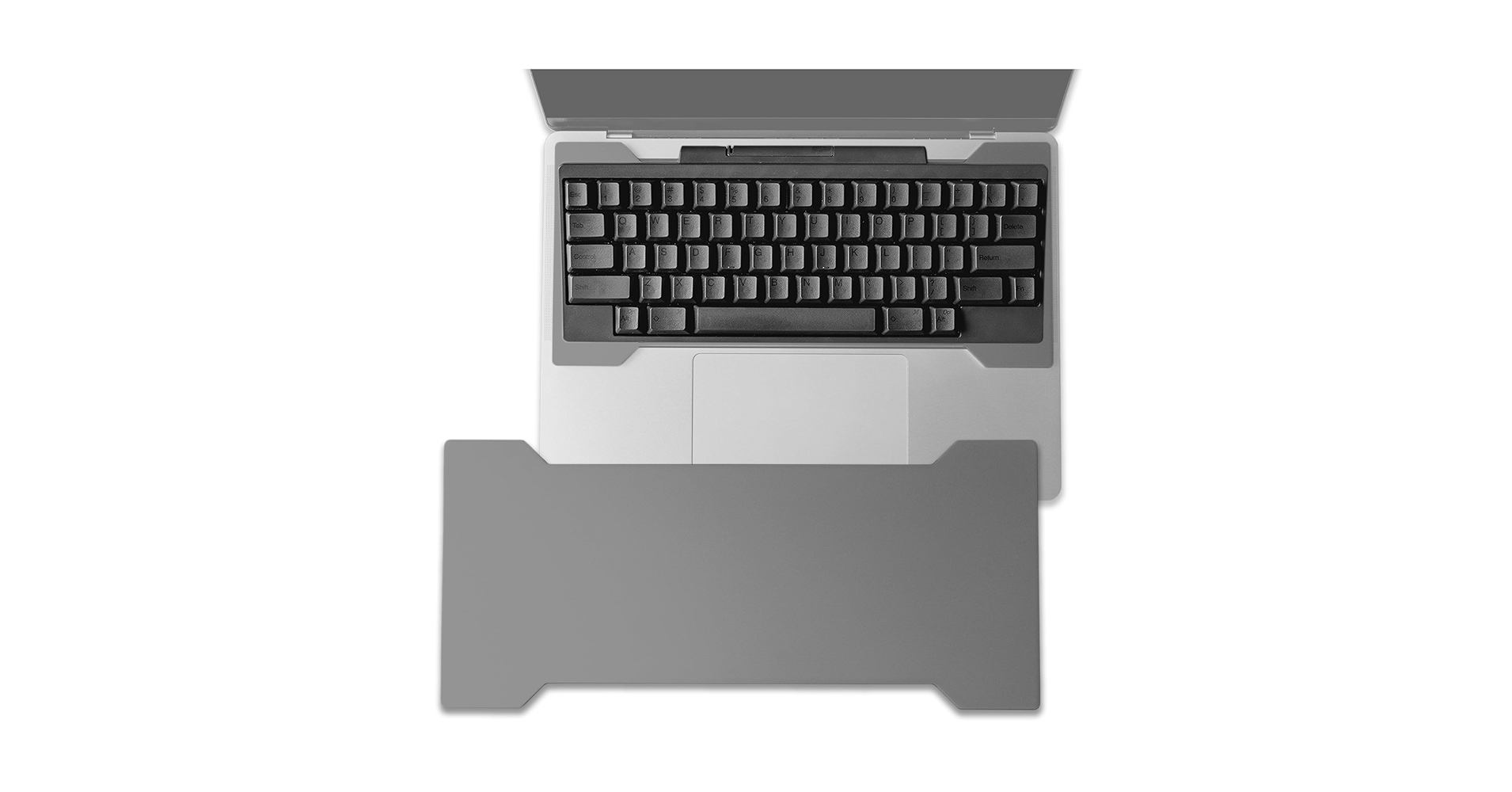
The Breakdown: This Aluminum Keyboard Bridge is an elegant and robust solution for elevating your typing experience. Crafted from a single piece of anodized aluminum, it provides a completely stable surface that won’t flex or wobble, even with heavy typing. Its clean lines and silver finish are designed to complement your MacBook Pro or Air perfectly.
Key Specs:
- Material: Anodized Aluminum
- Compatibility: Fits over 13-16″ MacBook keyboards
- Features: Rubber feet for grip, cable pass-through
The Community Verdict: Users almost universally praise its build quality and stability, stating it feels like a genuine Apple accessory. The weight is seen as a positive, as it prevents any movement during use. The only minor complaint that occasionally surfaces is a desire for sharper, more defined edges for an even more precise look.
Dealbreaker: Skip this if you need a lightweight, portable solution for working in multiple locations.
3. Kado Lift Riser Acrylic for External Keyboard, Frosted
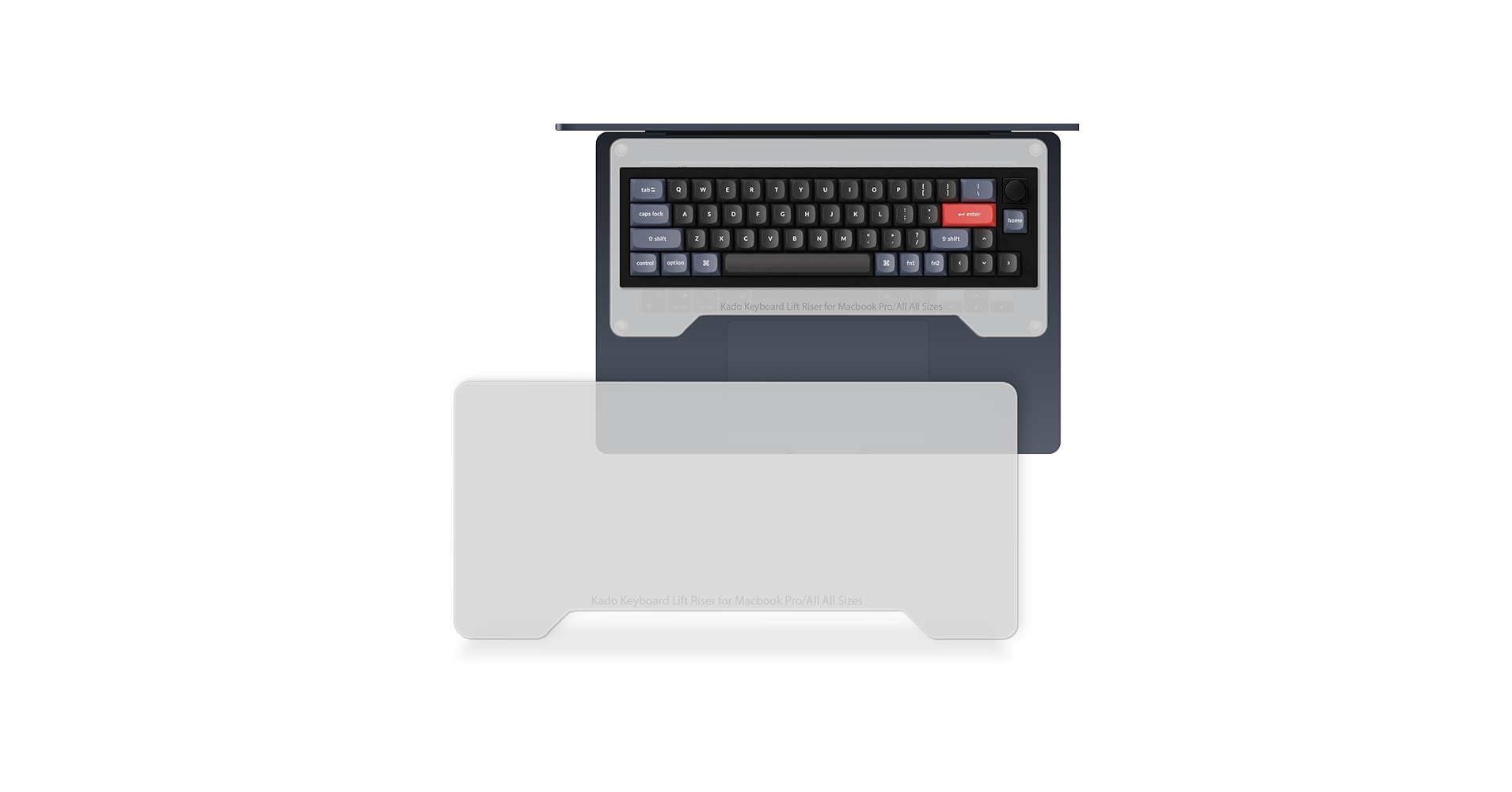
Pros
- Beautiful frosted acrylic finish
- Provides a gentle ergonomic angle
Cons
- Less rigid than aluminum bridges
- Can show fingerprints and smudges
The Breakdown: The Kado Lift Riser focuses on form as much as function. Its frosted acrylic construction diffuses light beautifully, creating a soft, modern look on any desk. Rather than a full bridge, this acts as an angled riser, providing a comfortable typing posture while maintaining a minimal visual profile.
Key Specs:
- Material: Frosted Acrylic
- Compatibility: Universal for most 65%-75% keyboards
- Angle: Fixed 7-degree incline (estimated)
The Community Verdict: Users buy this riser for its looks, and market research indicates they are rarely disappointed. It’s frequently praised for elevating the desk setup’s overall aesthetic. Some reports mention that without rubber grips, it can slide on slick surfaces, a problem easily solved with small, third-party adhesive feet.
Dealbreaker: Skip this if you use a heavy, full-size keyboard or need the absolute stability of a full metal bridge.
4. Aluminum Keyboard Bridge for Mechanical (Slim Profile)
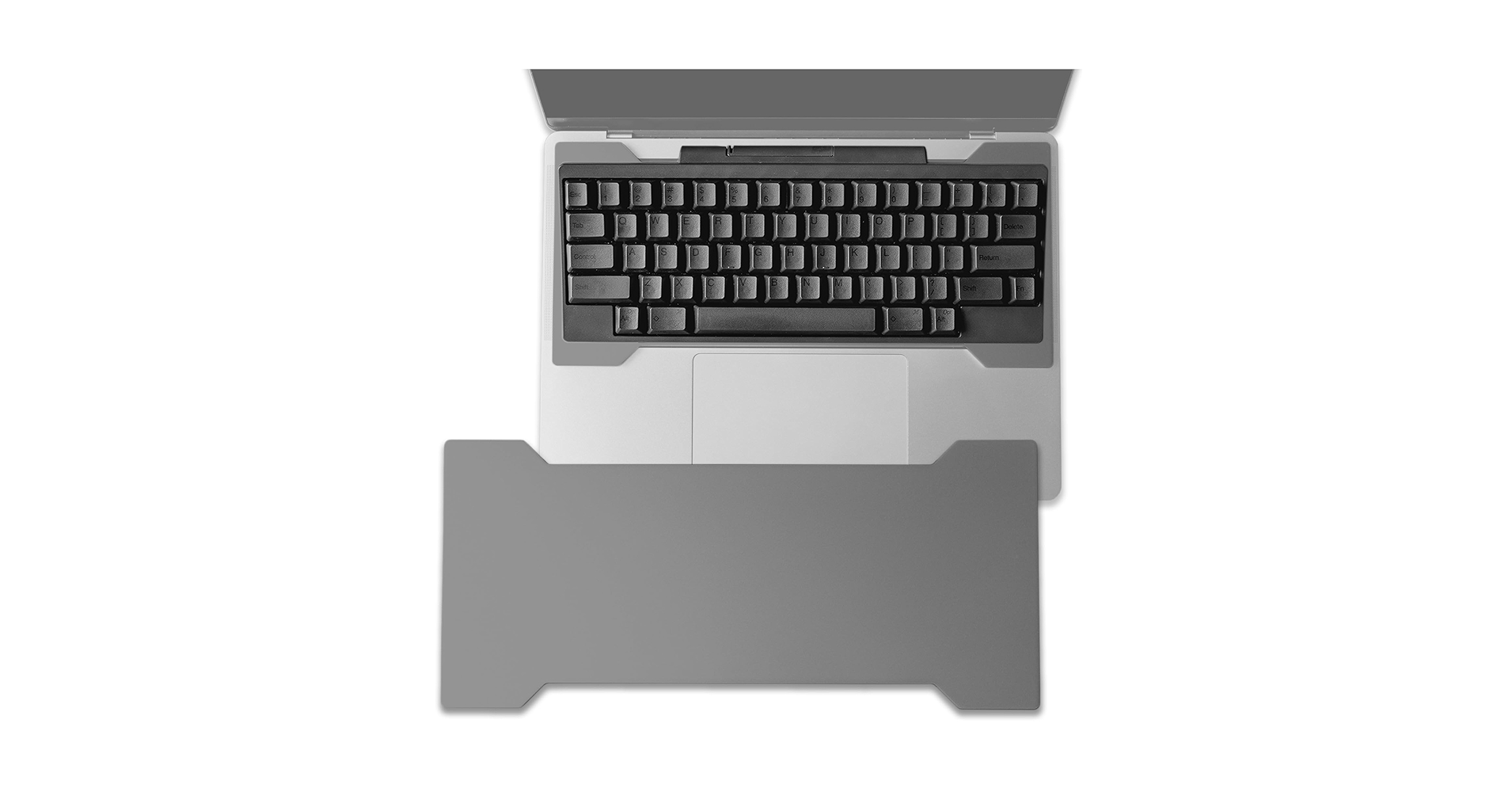
Pros
- Very lightweight and portable
- Sleek, ultra-minimalist design
Cons
- May feel less stable with heavy keyboards
- Thinner aluminum can have more flex
The Breakdown: This slim-profile version of the aluminum bridge prioritizes portability and a minimal footprint. It offers the same core functionality—placing your keyboard over the MacBook’s—but in a lighter package. It’s the ideal companion for a compact 65% or 75% mechanical keyboard you might carry between home and the office.
Key Specs:
- Material: Lightweight Aluminum Alloy
- Compatibility: Optimized for 13-14″ MacBooks
- Features: Thin profile for easy packing
The Community Verdict: Users who travel with their setup highly recommend this model for its low weight and slim design that easily slips into a laptop bag. The trade-off, as some point out, is a slight increase in flex compared to its heavier counterpart. It’s deemed perfectly adequate for most compact keyboards but may not be the best choice for a weighty, custom-built board.
Dealbreaker: Skip this if you use a full-sized or heavy custom mechanical keyboard and demand zero flex.
5. Keyboard Bridge, Keyboard Cover
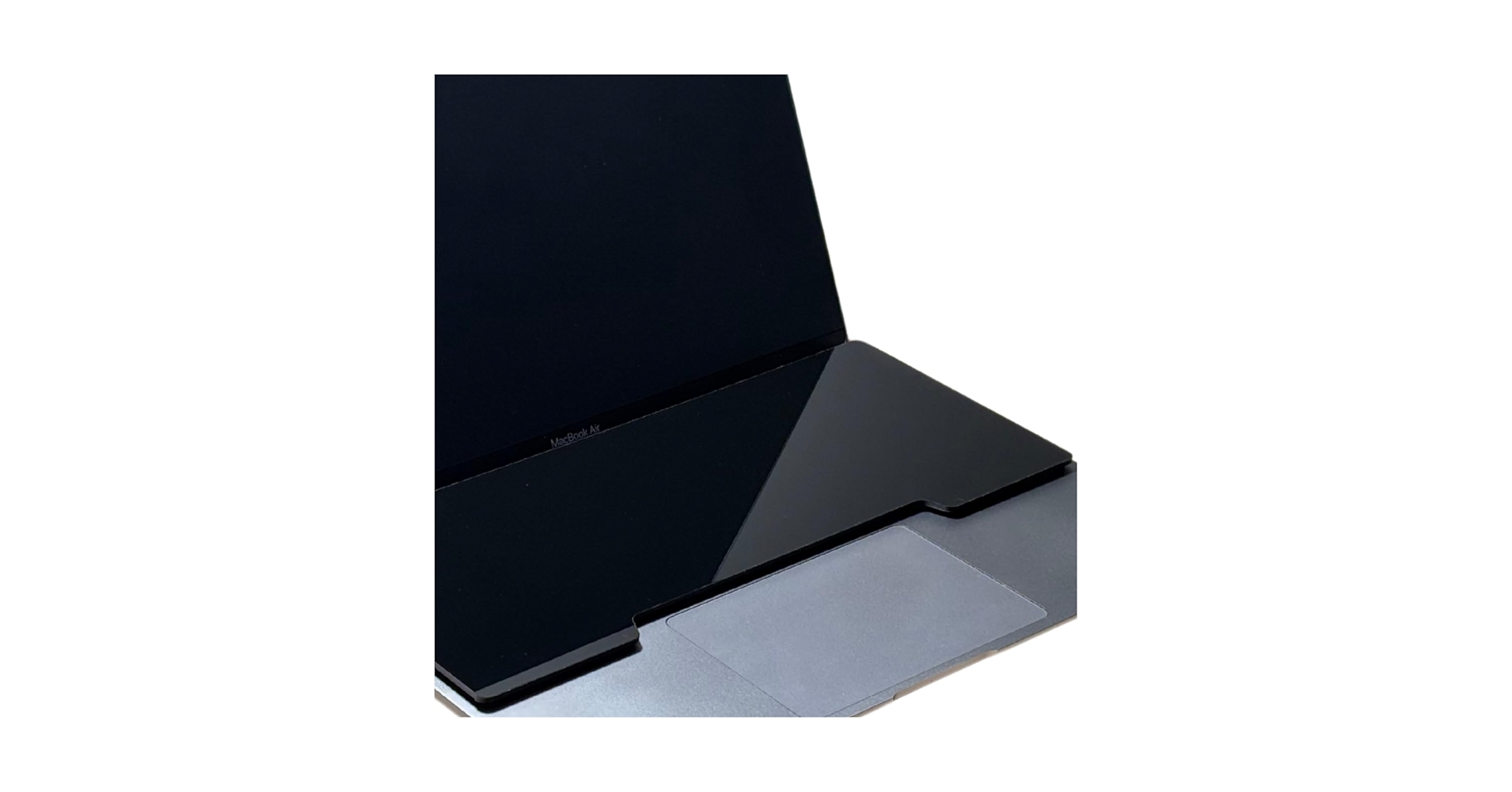
Pros
- Prevents accidental key presses
- Lightweight and easy to clean
Cons
- Polycarbonate build feels less premium
- May not be perfectly flat or rigid
The Breakdown: This product takes a utilitarian approach, acting as both a bridge and a protective cover. Made from durable polycarbonate, it creates a flat surface over your MacBook’s keys, stopping them from being pressed while also shielding them from dust and debris. It’s a simple, effective, and budget-friendly way to enable the use of an external keyboard.
Key Specs:
- Material: Polycarbonate
- Compatibility: Available for various MacBook models
- Features: Full coverage of built-in keyboard
The Community Verdict: User feedback indicates this cover does its job well, especially in preventing unwanted input from the laptop’s keyboard. It’s seen as a practical accessory, though most agree it lacks the high-end feel of its aluminum and acrylic counterparts. Some have noted that it may not sit perfectly flat initially but settles over time.
Dealbreaker: Skip this if desk aesthetics and premium materials are your top priority.
Frequently Asked Questions
1. Are all mechanical keyboards compatible with macOS?
Most modern USB and Bluetooth keyboards work with macOS. However, for the best experience, look for keyboards with a dedicated Mac mode or Mac-specific keycaps (Command, Option). Keyboards with QMK/VIA support can be fully remapped to match the Mac layout perfectly.
2. Do I really need a keyboard bridge or cover for my MacBook?
While not strictly necessary, a bridge or cover is highly recommended. It prevents accidental presses on the built-in keyboard, protects it from dust, and allows for a more comfortable and ergonomic placement of your external mechanical keyboard, especially when using the MacBook’s screen as your primary display.
3. Will a wireless mechanical keyboard drain my MacBook’s battery?
No. Wireless mechanical keyboards have their own internal batteries and do not draw power from your MacBook during use. You will only need to connect it to a power source (like your MacBook or a charger) when its own battery needs recharging.