
Switching to a vertical mouse is one of the most significant ergonomic upgrades you can make for your workspace. By rotating your wrist into a natural ‘handshake’ position, you reduce forearm strain and long-term fatigue. As we move into 2026, the demand for a truly modern peripheral—a rechargeable vertical mouse usb c—is standard. No more hunting for odd cables or disposable batteries. We’ve analyzed the market to find the top contenders that combine ergonomic design with the convenience of USB-C charging, ensuring your setup remains as streamlined and efficient as you are.
🚀 Quick Verdict / Top Pick
Logitech MX Vertical Wireless Mouse
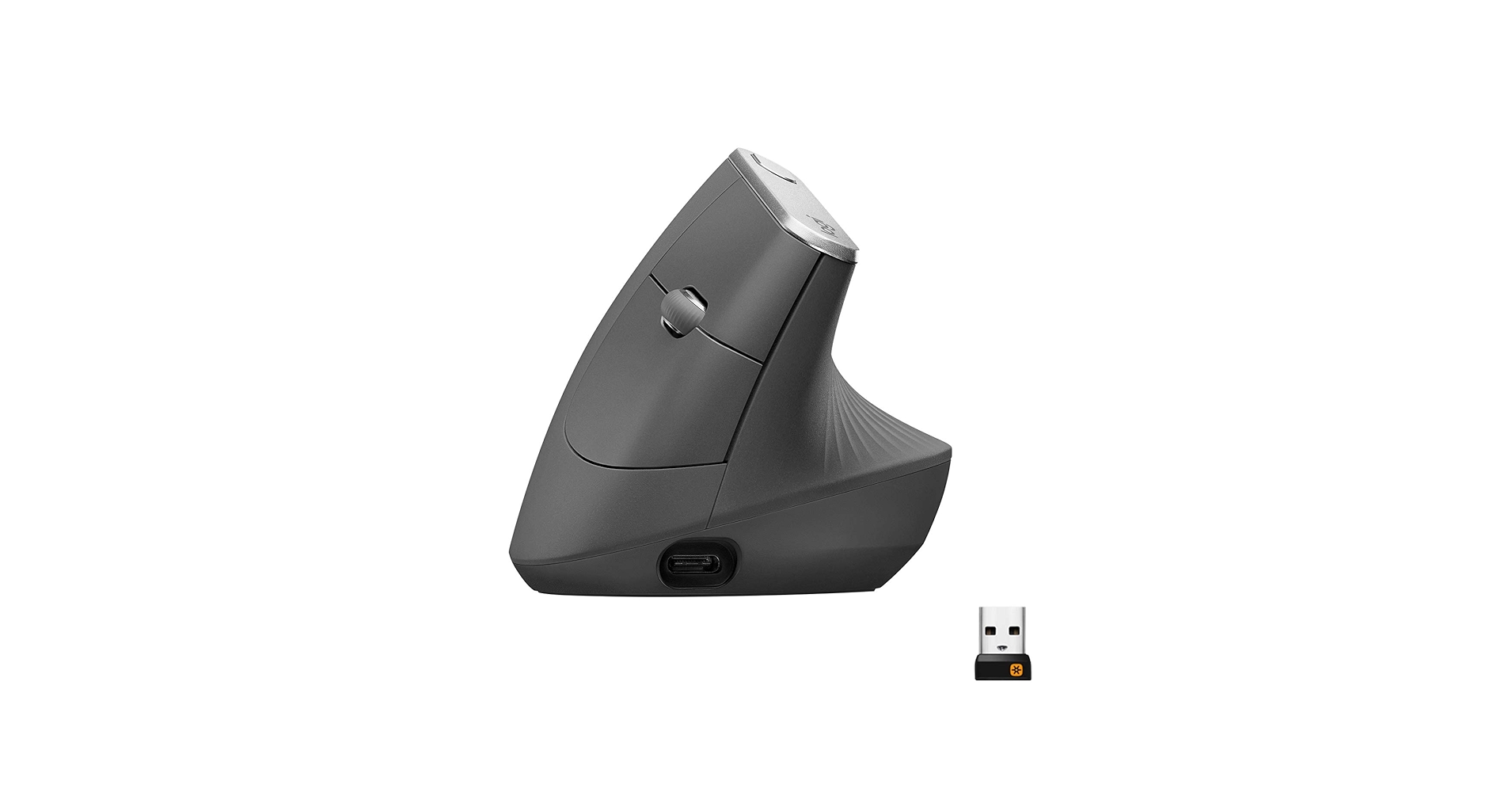
The Logitech MX Vertical wins for its superior build quality, flawless multi-device connectivity, and science-backed ergonomic design that sets the industry standard.
Rechargeable Vertical Mouse Comparison (2026)
| Product | Connectivity | Battery Life (Est.) | Best For |
|---|---|---|---|
| Logitech MX Vertical | Bluetooth, 2.4GHz, USB-C | Up to 4 Months | Overall Performance |
| TECKNET Ergonomic Mouse | Bluetooth, 2.4GHz | Up to 90 Days | Best Value |
| Generic Vertical Mouse | Bluetooth, 2.4GHz | Up to 60 Days | Budget Conscious |
| MEETION Left-Handed | 2.4GHz | Up to 30 Days | Left-Handed Users |
| LEKVEY Vertical Mouse | 2.4GHz | Up to 50 Days | Older Setups (Micro USB) |
Detailed Product Reviews
1. Logitech MX Vertical Wireless Mouse
Pros
- Exceptional build quality and premium materials
- Logitech Flow for seamless cross-computer control
- True USB-C charging and data port
- Long-lasting battery life (up to 4 months)
Cons
- Premium price point
- May be too large for users with smaller hands
The Breakdown: The Logitech MX Vertical is the benchmark for a reason. Its 57-degree angle is the result of extensive ergonomic research, and the textured rubber surface provides a secure, comfortable grip. Market research indicates its sensor is highly accurate and the customization options through the Logi Options+ software are robust and intuitive.
Key Specs:
- Connectivity: Bluetooth, Logitech Unifying Receiver (2.4GHz), USB-C Wired
- Ergonomic Angle: 57°
- Battery: Rechargeable (up to 4 months on a full charge)
- DPI: 400-4000 DPI (fully adjustable)
- Hand Size: Best for Medium to Large
The Community Verdict: Users consistently praise the immediate feeling of relief from wrist strain and the premium feel of the device. The ability to switch between three paired devices is a commonly cited advantage for power users. Some critique is aimed at its size, which can be unwieldy for smaller hands.
Dealbreaker: Skip this if you are on a tight budget or have notably small hands, as the ergonomics are optimized for a larger grip.
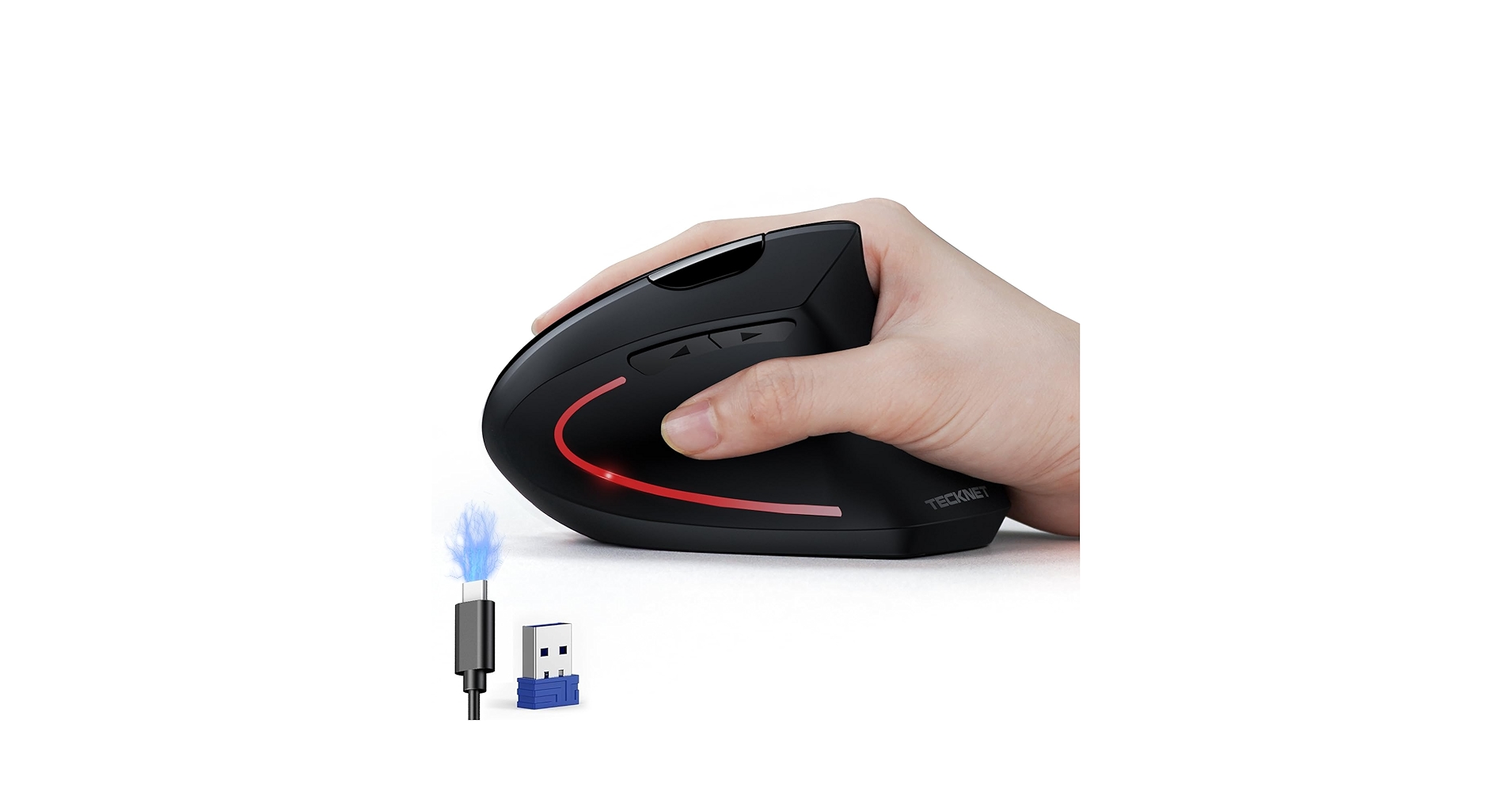
2. TECKNET Ergonomic Mouse, Wireless Rechargeable
Pros
- Excellent value for money
- Dual connectivity (Bluetooth and 2.4GHz)
- Long battery life with USB-C charging
Cons
- Build materials feel less premium than Logitech
- Software customization is limited
The Breakdown: TECKNET has carved a niche for reliable, budget-friendly peripherals, and this vertical mouse is no exception. It delivers the core ergonomic benefits and modern conveniences like USB-C and dual-mode wireless without the high cost. The consensus is that it’s a comfortable and functional mouse for daily office work.
Key Specs:
- Connectivity: Bluetooth 5.0, 2.4GHz USB Receiver
- Ergonomic Angle: Approx. 60°
- Battery: Rechargeable (up to 90 days)
- DPI: 5 levels (up to 2400 DPI)
- Hand Size: Best for Medium
The Community Verdict: Owners report being pleasantly surprised by the performance and battery life for the price. The silent clicks are a frequently mentioned positive feature. Some users note that the plastic can feel a bit slick compared to more expensive, rubberized options.
Dealbreaker: Skip this if you need advanced software for custom macros or seamless control across multiple computers.
3. Ergonomic Mouse Wireless Bluetooth Vertical Mouse

Pros
- Extremely affordable entry point
- Features both Bluetooth and 2.4GHz connectivity
- USB-C charging port
Cons
- Questionable long-term durability
- Inconsistent sensor performance reported by some users
The Breakdown: This model represents a category of generic-branded mice that offer an impressive feature set for a rock-bottom price. You get the ergonomic shape, dual wireless modes, and USB-C charging. However, user feedback suggests that build quality and component consistency can be a gamble.
Key Specs:
- Connectivity: Bluetooth, 2.4GHz USB Receiver
- Ergonomic Angle: Approx. 60°
- Battery: Rechargeable (up to 60 days)
- DPI: 3 levels (up to 1600 DPI)
- Hand Size: Best for Small to Medium
The Community Verdict: Many users find it to be a perfectly adequate mouse for basic office tasks and appreciate the low cost of entry. The most common complaints revolve around the sensor occasionally skipping or the scroll wheel feeling imprecise over time. It’s often seen as a good ‘tester’ mouse before upgrading.
Dealbreaker: Skip this if your work demands pixel-perfect precision or if you need a peripheral that will reliably last for several years.
4. MEETION Left-Handed Ergonomic Mouse

Pros
- True left-handed ergonomic design
- Comfortable grip and button placement for lefties
- Rechargeable with a USB-C port
Cons
- Lacks Bluetooth connectivity (2.4GHz only)
- Fewer features compared to right-handed counterparts
The Breakdown: Finding a true left-handed vertical mouse is a challenge, and MEETION provides a solid option. It mirrors the design of popular right-handed models, offering the handshake grip specifically for southpaws. While it may not have all the bells and whistles of the premium market, its core function as a comfortable, rechargeable left-handed mouse is its main selling point.
Key Specs:
- Connectivity: 2.4GHz USB Receiver
- Ergonomic Angle: Approx. 60°
- Battery: Rechargeable (up to 30 days)
- DPI: 3 levels (up to 2400 DPI)
- Hand Size: Best for Medium to Large
The Community Verdict: Left-handed users are overwhelmingly positive, simply because a dedicated product exists that meets their needs. Reports suggest it is comfortable and a significant ergonomic improvement over using an ambidextrous or right-handed mouse. The lack of Bluetooth is a common point of criticism.
Dealbreaker: Skip this if you need to connect via Bluetooth or switch between multiple devices without moving a dongle.
5. Ergonomic Mouse, LEKVEY Vertical Wireless Mouse

Pros
- Widely popular and well-regarded shape
- Affordable and frequently on sale
- Removable wrist rest is a unique feature
Cons
- Uses Micro USB for charging, not USB-C
- 2.4GHz only, no Bluetooth option
The Breakdown: The LEKVEY vertical mouse has been a popular budget choice for years due to its comfortable design and low price. It provides a solid ergonomic experience and includes a detachable palm rest for added support. However, its technology is dated, which is a critical factor in our 2026 review.
Key Specs:
- Connectivity: 2.4GHz USB Receiver
- Ergonomic Angle: Approx. 60°
- Battery: Rechargeable (via Micro USB)
- DPI: 3 levels (up to 1600 DPI)
- Hand Size: Best for Medium to Large
The Community Verdict: For years, users have recommended this as a great first vertical mouse. The shape and comfort are frequently praised. In recent years, however, the consensus is that the Micro USB port is a major inconvenience in a world dominated by USB-C.
Dealbreaker: Skip this if your primary goal is a modern, streamlined setup with a single cable type. The Micro USB port is a dealbreaker for anyone specifically searching for a USB-C mouse.
Buying Guide: How to Choose a Rechargeable Vertical Mouse
Selecting the right vertical mouse involves more than just picking one from a list. Consider these key factors to match a mouse to your specific needs.
Connectivity: Bluetooth vs. 2.4GHz vs. Wired
Most models here offer both Bluetooth and a 2.4GHz USB dongle. Bluetooth is ideal for portability and connecting to devices like tablets or laptops without using a port. A 2.4GHz dongle generally provides a more stable, lower-latency connection, which is better for a stationary desktop. Premium models like the MX Vertical also allow for a wired connection via the USB-C port, which is great for charging while you work.
Why USB-C is Non-Negotiable in 2026
A unified cable ecosystem simplifies your entire desk. The ability to use the same cable for your phone, laptop, and mouse isn’t just a convenience; it’s a mark of an efficient, modern setup. Streamlining your charging station, perhaps with a dedicated desk clamp power strip with USB C, eliminates clutter. This is also a critical consideration when choosing connectivity solutions, as understanding the Thunderbolt 4 dock vs USB C hub debate often comes down to port availability and charging capabilities.
Ergonomic Angle & Hand Size
Not all vertical mice are created equal. The Logitech MX Vertical uses a 57-degree angle, while most others use a steeper ~60-degree angle. This small difference can have a big impact on comfort. More importantly, check the mouse dimensions. A mouse that’s too large or too small for your hand will negate the ergonomic benefits.
Frequently Asked Questions (FAQ)
1. Do vertical mice actually help with wrist pain?
The consensus among ergonomists and long-time users is yes. By keeping your wrist in a neutral ‘handshake’ posture, a vertical mouse can alleviate the pressure on the median nerve and reduce the forearm pronation that contributes to repetitive strain injuries (RSI) and carpal tunnel syndrome.
2. How long does it take to get used to a vertical mouse?
User reports suggest an adjustment period of anywhere from a few hours to a week. Initially, your cursor movements may feel less precise as you’re using larger arm muscles instead of small wrist movements. Stick with it for a few days, and it will begin to feel natural.
3. Can you game with a vertical mouse?
While you can, it’s generally not recommended for fast-paced, competitive gaming like first-person shooters. The design prioritizes comfort over the rapid, precise movements and quick lift-off actions required in gaming. For slower-paced strategy or role-playing games, it can be perfectly fine.